
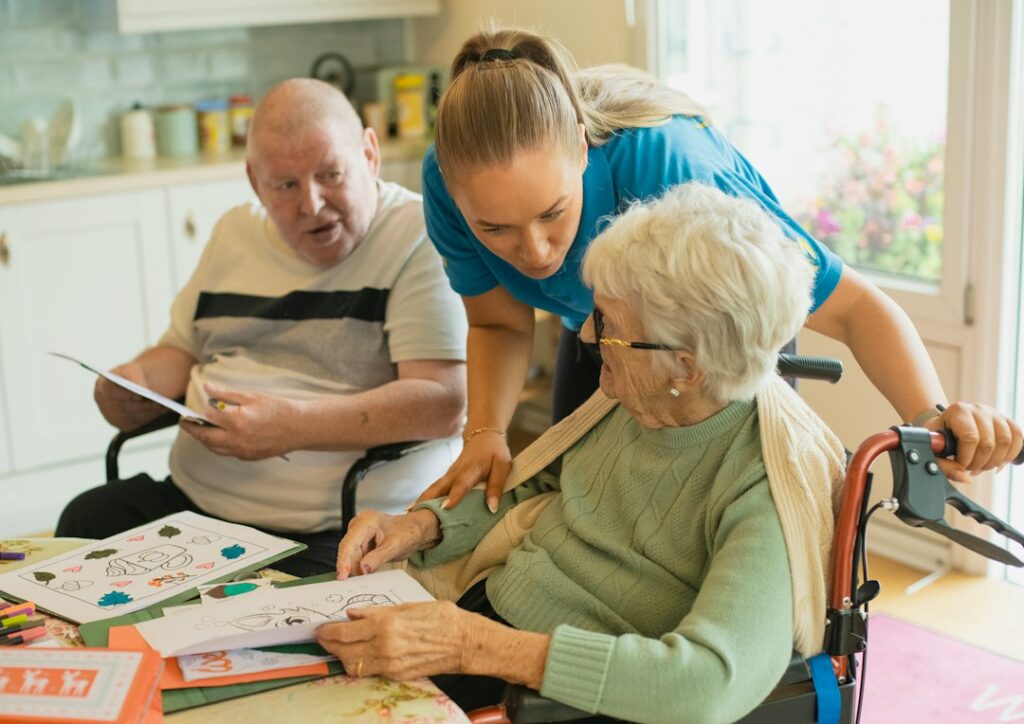
Moving into assisted living can bring relief, uncertainty, sadness, and resistance—all at the same time. Seniors often need time to adjust to a new routine, unfamiliar surroundings, and changes in independence. Family members can make the transition easier by offering steady support without taking over.
Why does assisted living feel difficult at first?
The first few weeks may be challenging because a senior is adapting to several changes at once. These can include a different bedroom, new neighbors, scheduled meals, group activities, medication routines, and less control over daily decisions.
A move may also follow a health event, the loss of a spouse, or increasing difficulty managing a home. Even when assisted living is the safest choice, the transition can feel like a loss of privacy, identity, or independence.
Common early reactions include:
- Sadness or tearfulness
- Irritability or anger
- Trouble sleeping
- Reduced appetite
- Anxiety about getting lost or making mistakes
- Repeated requests to return home
- Withdrawal from activities
- Increased dependence on family members
These reactions do not automatically mean the move was a mistake. Adjustment is often uneven. A senior may seem comfortable one day and distressed the next.
How can family members prepare before the move?
Preparation should focus on familiarity and participation. Seniors generally adjust better when they understand what will happen and have a meaningful role in decisions.
Before moving, discuss practical details in plain language. Explain where personal belongings will go, how meals work, when family visits are likely, and what daily routines may look like. Avoid promising that everything will remain exactly the same.
Allow the senior to make manageable choices, such as:
- Which photographs to display
- What clothing to bring
- How to arrange furniture
- Which familiar blanket, chair, clock, or lamp belongs in the room
- Whether to attend a particular activity
- What foods or snacks should be kept available
Downsizing can be emotional. Instead of treating belongings as clutter, ask which items carry personal meaning. A small collection of photographs, recipe cards, books, religious objects, craft supplies, or family keepsakes can help a room feel connected to the person’s history.
If possible, visit the setting before move-in during different parts of the day. Notice noise levels, lighting, dining routines, outdoor access, and how easily residents can find common areas. This gives the senior a more realistic picture than a brief tour alone.
What should happen during the first week?
The first week should emphasize reassurance, orientation, and rest. Too many visitors, errands, or activities can leave a new resident overwhelmed.
Help establish a simple routine. Family members can use a written calendar showing expected visit days, phone calls, appointments, and favorite activities. Predictability can reduce worry, especially for someone with memory loss.
During visits, focus on ordinary conversation rather than repeatedly asking, “Are you happy here?” A senior may feel pressured to give the “right” answer. Try discussing familiar subjects, looking through photographs, folding laundry, listening to music, or taking a short walk together.
It can also help to learn the names of a few staff members and neighbors. Familiar faces make a new environment feel less anonymous. Introduce the senior gradually rather than pushing them into a large social gathering immediately.
Family members should avoid making dramatic promises such as “You will love it here” or “You can come home whenever you want,” unless those statements are realistic. Honest reassurance is more helpful: “This is a big change, and the family will help you learn the routine.”
How can a senior maintain independence?
Assisted living should support safe independence rather than eliminate every choice. Seniors often adjust more confidently when they continue doing tasks that remain safe and meaningful.
Depending on abilities, this might include choosing clothing, organizing personal items, watering a plant, writing a grocery list, helping set a table, or deciding how to spend free time. A senior who can safely manage part of a task should not automatically be prevented from doing it.
Family members may unintentionally create dependence by completing tasks too quickly. Allow extra time for dressing, conversation, or navigating the building. Patience communicates respect.
Independence can also come from responsibilities. A resident may enjoy caring for photographs, sorting mail with supervision, helping another resident find an activity, or maintaining a familiar hobby. The goal is not to recreate every former household duty, but to preserve purpose and personal identity.
What if the senior refuses activities?
A senior does not need to attend every group activity to adjust successfully. Social connection can develop through smaller, lower-pressure experiences.

Instead of insisting on a full event, suggest a short visit to a common room, a quiet craft, a music program, or coffee with one other resident. Some people prefer observing before participating.
Ask about interests that existed before the move. Someone who dislikes organized games may enjoy gardening, sports conversations, reading, faith-based practices, puzzles, cooking discussions, or looking at local history. Activities should match the person’s personality, not just the available schedule.
If withdrawal continues, explore possible causes. Pain, hearing difficulty, poor vision, fatigue, depression, medication effects, or confusion can make socializing feel uncomfortable. Changes in mood, appetite, sleep, or behavior should be shared with the appropriate care staff or healthcare professional.
How often should family members visit?
There is no universal schedule, but consistency is usually more helpful than occasional long visits. A senior may feel more secure knowing that family members typically call or visit on particular days.
If in-person visits are limited, brief phone calls, familiar photographs, letters, or recorded messages may help. Make sure communication is manageable; repeated calls throughout the day can sometimes increase anxiety rather than reduce it.
Visits should not always focus on problems. Share ordinary family news, seasonal observations, photographs, and small updates. In Glenside, PA, changing weather and seasonal routines may affect walking, outdoor time, and transportation, so indoor plans can be useful during cold, rainy, or very hot periods.
At the same time, family members should avoid visiting only when something is wrong. A steady relationship helps the new residence feel like part of life rather than a place associated only with illness or crisis.
How can families tell whether adjustment is progressing?
Adjustment does not require constant happiness. More useful signs include increased familiarity with the routine, improved sleep or appetite, recognition of staff, occasional participation, fewer urgent calls, or renewed interest in personal activities.
Progress may take several weeks or longer, especially after a sudden move or a major health change. Some seniors settle quickly, while others need repeated explanations and gentle reminders.
Persistent distress deserves attention. Contact the care team or healthcare professional if there is ongoing refusal to eat, repeated falls, severe confusion, unexplained weight loss, worsening depression, statements about hopelessness, or a sudden change in behavior.
Families should also review whether the daily routine fits the senior’s needs. A person may struggle not because assisted living is inherently unsuitable, but because the room is difficult to navigate, hearing aids are not working, meals are poorly tolerated, or the schedule does not match established habits.
What mistakes should families avoid?
The most common mistake is treating adjustment as a test the senior must pass quickly. Pressure, arguments, or repeated reminders that the move is “for your own good” can increase resistance.
Other unhelpful approaches include:
- Removing all familiar belongings
- Speaking about the senior as if they are not present
- Making every decision without offering choices
- Comparing the senior with residents who adjusted faster
- Visiting only to criticize staff or inspect the room
- Promising an immediate move back home during moments of distress
- Assuming quietness means comfort
- Ignoring hearing, vision, pain, or medication concerns
A calmer approach recognizes that the senior is adapting to a major life change. Respectful communication, familiar objects, predictable contact, and opportunities for safe choice can gradually build trust in the new setting.
