
Assisted living should provide more than a safe room and scheduled meals. Quality care combines dependable support, respect for personal choice, meaningful daily activities, and an environment where changes in health or behavior are noticed early.
For families in Glenside, PA, evaluating care often involves comparing several communities, asking detailed questions, and observing how staff interact with residents. A polished building or friendly tour is not enough by itself. The strongest indicators are found in everyday routines, staffing practices, communication, and the way residents are treated when needs become more complex.
What does quality assisted living care look like?
Quality care is consistent, individualized, and responsive. Residents receive help with the tasks they cannot safely manage alone while retaining as much independence as possible.
Support may include bathing, dressing, medication reminders, mobility assistance, meals, housekeeping, and transportation. High-quality care does not treat these services as a one-size-fits-all package. Staff should understand each resident’s abilities, preferences, routines, and health concerns.
Look for evidence that the community:
- Creates a care plan based on the resident’s actual needs
- Updates that plan when health or mobility changes
- Encourages residents to make everyday choices
- Protects privacy during personal care
- Provides clear explanations before assistance is given
- Responds promptly when a resident asks for help
A resident who needs assistance should not be made to feel incapable. Good care supports independence rather than replacing it unnecessarily.
Are staff members attentive and respectful?
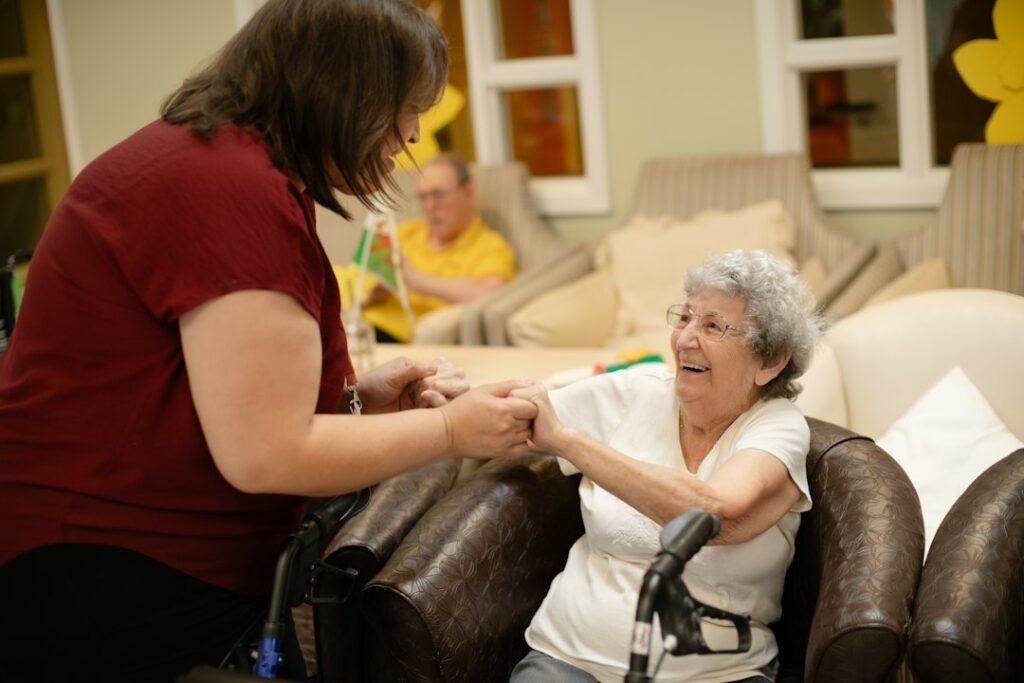
Staff behavior is one of the clearest signs of care quality. During a visit, notice whether employees greet residents by name, listen without rushing, and speak directly to residents rather than speaking only to family members.
Respectful care includes patience during conversations, calm responses to repeated questions, and sensitivity to embarrassment or frustration. Staff should explain what they are doing and allow residents enough time to respond.
It is also useful to observe the pace of the environment. Staff may be busy, but residents should not appear routinely ignored, hurried, or left waiting for basic assistance. A quiet moment is not automatically a problem; repeated unanswered requests, call signals, or visible distress deserve closer attention.
Ask how new employees are trained and how ongoing training is handled. Important areas may include dementia care, fall prevention, safe transfers, infection control, medication procedures, emergency response, and communication with families.
How can families evaluate staffing and supervision?
Staffing quality involves more than a posted employee-to-resident ratio. The relevant questions are whether enough trained people are present during each shift and whether supervision continues overnight, on weekends, and during holidays.
Ask:
- Who is available during overnight hours?
- How are absences and call-outs covered?
- Are licensed nurses available, and at what times?
- How does the community respond if a resident’s needs increase?
- Who supervises medication management?
- How are concerns reported and documented?
Frequent use of unfamiliar temporary staff can affect continuity, especially for residents with memory loss or anxiety. A stable team is more likely to recognize subtle changes, such as a resident eating less, walking differently, sleeping poorly, or becoming unusually withdrawn.
Families should also ask whether staff turnover is tracked and how often care assignments change. No community has perfect staffing stability, but evasive answers may make it difficult to understand the daily experience.
Are residents clean, comfortable, and engaged?
The physical condition of residents can reveal whether basic care is being delivered consistently. Residents should generally appear clean, appropriately dressed, and comfortable. Rooms and shared areas should be reasonably maintained, without persistent odors, clutter, unsafe walkways, or neglected equipment.
Engagement matters as much as appearance. Quality assisted living offers opportunities for residents to use their abilities and interests. Activities might include exercise, music, crafts, discussion groups, gardening, games, religious observance, reading, or time outdoors.
Activities should not be used simply to keep residents occupied. They should be varied, accessible, and adapted for different ability levels. A resident who cannot join a large group may benefit from a smaller activity, a one-to-one conversation, or assistance with a familiar hobby.
Ask whether residents can decline activities without being pressured and whether schedules change based on participation and interest.
How are meals and nutrition handled?
Meals are a daily test of both care and communication. Food should be appealing, served at reasonable times, and adjusted for medical needs, allergies, swallowing concerns, cultural preferences, and personal dislikes.
Ask whether residents can choose between meal options, request substitutions, or receive help eating when necessary. Staff should monitor significant changes in appetite, weight, hydration, or swallowing and communicate concerns to the appropriate health professionals and family contacts.
During a meal, observe whether residents are seated comfortably and whether assistance is provided discreetly. Dining should feel like a social part of the day, not merely a task completed as quickly as possible.
Seasonal weather can also affect routines in the local community. During hot, humid periods, residents may need reminders and support with hydration. During cold or icy weather, safe indoor movement and appropriate clothing become more important, particularly for people who use walkers or wheelchairs.
Does the community communicate clearly with families?
Reliable communication is a major sign of quality care. Families should know whom to contact, what types of changes will be reported, and how urgent concerns are handled.
A strong communication process includes updates about falls, injuries, medication changes, infections, significant behavior changes, hospital visits, and changes in eating or mobility. Routine updates are also valuable because families may notice patterns that are difficult to see during short visits.

Ask whether care plan meetings are scheduled, how family preferences are documented, and how disagreements are addressed. Good communication does not mean families receive constant messages about every minor event. It means important information is shared accurately, promptly, and respectfully.
What safety practices should residents and families examine?
Safety should be visible without making the environment feel restrictive. Hallways should be well lit and free of avoidable obstacles. Bathrooms should have appropriate supports, and residents should be able to summon help.
Ask how the community handles:
- Falls and post-fall monitoring
- Emergency evacuations and severe weather
- Wandering or exit-seeking behavior
- Medication errors
- Infection prevention
- Transportation and outside medical appointments
- Changes in mobility or cognitive status
A community should also explain what happens if assisted living can no longer meet a resident’s needs. Clear limits and transfer procedures are more reassuring than vague promises that every level of care can be handled indefinitely.
What should a resident observe during an unplanned visit?
A scheduled tour shows how a community presents itself. An unplanned visit, when permitted, may provide a more realistic view of ordinary routines.
Notice whether staff appear approachable, whether residents seem comfortable asking for help, and whether the environment feels orderly without being overly controlled. Listen for alarms, unanswered calls, frequent complaints, or repeated references to delays.
Talk with residents if they are willing. Simple questions can be revealing:
- Do staff respond when you need help?
- Can you choose your daily routine?
- Are meals satisfactory?
- Do you feel comfortable raising concerns?
- Are there activities you enjoy?
One person’s experience cannot represent the entire community, but repeated patterns are worth considering.
Which questions reveal the most about care quality?
Direct questions often produce more useful information than general requests for reassurance. Ask for examples rather than broad statements.
Instead of asking whether staff provide individualized care, ask how the community handled a recent resident whose mobility declined. Instead of asking whether families are informed, ask when the last care plan update was sent and who participated.
Request to review the written fee and service information carefully. Extra charges, limits on assistance, transportation policies, medication services, and rules about changing care needs should be clear before a decision is made.
Quality care is easiest to recognize when answers are specific, staff behavior matches the stated policies, and residents’ daily experiences support what the community says about itself.
