
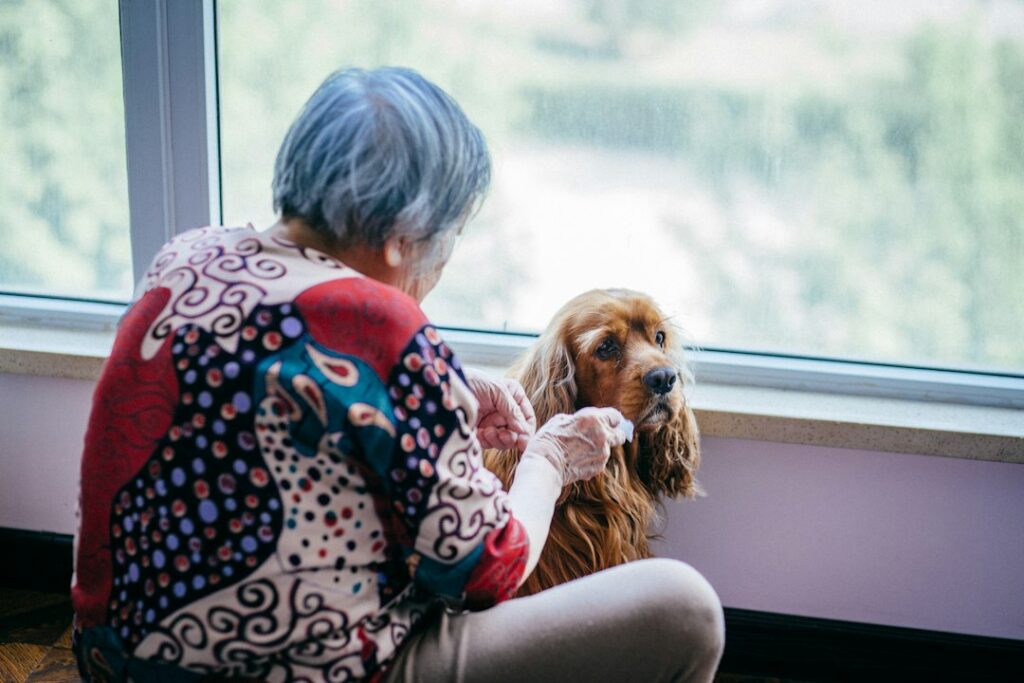
Are pets allowed in assisted living communities?
Pet policies vary by community. Some assisted living residences allow residents to keep a cat, dog, bird, or another small companion animal, while others permit only visits, shared community pets, or organized animal-assisted activities.
In Pennsylvania, an assisted living residence must state in its written residence rules whether pets are permitted on the premises. The residence must also tell applicants whether pets are allowed and whether animals are already present. This means a general assumption is not enough; the current policy should be reviewed before a move is finalized.
A residence may allow pets but still limit:
- The types or sizes of animals permitted
- The number of pets in a living unit
- Access to dining rooms, activity spaces, or shared lounges
- Outdoor walking areas
- Overnight stays by visiting animals
- Who is responsible for feeding, grooming, cleaning, and veterinary care
A “pet-friendly” community may therefore have more specific requirements than many families expect.
What Pennsylvania rules require for pets?
Pennsylvania regulations establish several basic safeguards for pets in assisted living residences. Cats and dogs present at the residence must have a current rabies vaccination, and a current vaccination certificate from a licensed veterinarian must be kept.
Pets that residents can access must also be in good health and nonaggressive toward residents. These requirements help reduce the risk of injury, disease transmission, and preventable conflicts in shared living areas.
If a residence charges an additional pet fee, that charge must be included in the resident-residence contract. Families should look for the fee, deposit, refund terms, and any separate cleaning or damage provisions in writing.
State requirements are a minimum. A community can impose additional rules related to safety, sanitation, allergies, building design, insurance, or the animal’s ability to live comfortably in the setting.
Who is responsible for the pet?
In most communities, the resident remains responsible for the animal even if staff members provide limited assistance. Responsibility may include:
- Providing food, water, medication, and routine grooming
- Arranging veterinary visits and maintaining vaccination records
- Cleaning accidents promptly
- Controlling barking, scratching, jumping, or other disruptive behavior
- Keeping the animal leashed or secured in required areas
- Arranging care if the resident is hospitalized or temporarily unable to provide it
Some residents may need help with one or more of these tasks. That help should be discussed before move-in and documented in the resident’s service plan or agreement. Staff assistance may be limited, unavailable, or subject to an additional charge.
Families should create a backup plan as well. A trusted relative, friend, private caregiver, or other designated person may need to take over if a resident has a sudden health change. The plan should address short-term emergencies as well as the possibility that the resident can no longer safely manage the animal.
What should families ask before moving in?
A written pet policy is more useful than a verbal statement that “pets are welcome.” Questions should cover the entire daily routine.
Ask whether the policy explains:
- Which species, breeds, weights, or ages are permitted
- Whether the animal must live in the resident’s private unit
- Whether roommates must agree to the animal
- Where pets may be walked or exercised
- Who removes waste and cleans accidents
- Whether pets may enter dining, therapy, or shared activity areas
- What records are required for vaccinations and veterinary care
- Whether pet deposits, monthly charges, or cleaning fees apply
- What happens if the animal becomes ill, aggressive, noisy, or unable to walk
- What happens if the resident moves to a higher level of care
- Who takes custody of the pet after hospitalization or death

It is also sensible to ask how complaints are handled. A policy should address concerns involving allergies, fear of animals, noise, odors, property damage, or unsafe interactions between pets and residents.
Can a service animal or assistance animal be treated like a pet?
Not always. Service animals and assistance animals may be covered by disability-related protections that differ from ordinary pet rules. A community may still apply reasonable safety, vaccination, sanitation, and behavior requirements, but it generally should not treat every assistance animal as a convenience pet.
The distinction can be complicated because service animals, emotional support animals, and ordinary pets do not have identical legal definitions. A resident who relies on an animal because of a disability should raise that issue early and ask what documentation or accommodation process applies.
A pet policy should not be used as a substitute for an individualized review of a disability-related need.
What health and safety issues matter most?
A companion animal can provide comfort, routine, exercise, and social connection. It can also create practical risks in a setting where residents may use walkers, wheelchairs, oxygen equipment, or mobility aids.
Common concerns include:
- Tripping over an animal or leash
- Bites, scratches, or jumping
- Allergic reactions or asthma symptoms
- Fleas, ticks, parasites, or infectious disease
- Pet food, litter, or waste in walking paths
- Difficulty evacuating with an animal during a fire or other emergency
- Confusion or distress caused by barking or unfamiliar animals
The physical layout matters. A residence with secure walking routes, elevator access, outdoor lighting, and nearby green space may be easier for a resident and pet to manage than a building with heavy foot traffic or limited outdoor access. In Glenside, seasonal rain, summer heat, winter ice, and occasional snow can make outdoor pet care more difficult for older adults, particularly when balance or endurance is limited.
What if a resident can no longer care for the pet?
This possibility should be addressed before it becomes an emergency. A written contingency plan can identify the person authorized to make decisions, the location of veterinary records, the animal’s medications, feeding routine, preferred equipment, and temporary or permanent caregivers.
A change in care needs does not automatically mean the pet must leave immediately, but the residence may reassess whether the arrangement remains safe and workable. The outcome may depend on the animal’s behavior, the resident’s abilities, the availability of outside support, and the terms of the residence agreement.
Families should avoid waiting until a hospitalization or cognitive decline creates a crisis. Clear planning protects both the resident and the animal.
How can residents compare pet policies fairly?
The most useful comparison is not simply whether animals are allowed. It is whether the policy supports safe, realistic daily care.
Before choosing a residence, review the written rules and contract together. Observe where residents walk pets, how common areas are arranged, and whether animals appear calm and well supervised. Ask for specific examples rather than broad assurances.
A workable policy should balance companionship with the comfort, health, and safety of everyone in the community. For residents and families in Glenside, understanding that balance in advance can make a move more predictable and help prevent avoidable problems after admission.
